Plate Compactor vs. Drum Roller: Selecting the Right Compaction Tool

Achieving 95% to 98% Modified Proctor density in road base requires matching the physical properties of your aggregate with the correct compaction machinery. Using an undersized machine leads to loose, honeycombed sub-bases that settle under vehicle tires, while using an oversized roller in tight spaces risks cracking adjacent foundations or underground utility lines.
In this guide, we evaluate the compaction mechanics, depth capabilities, pass patterns, and economics of walk-behind plate compactors vs. ride-on vibratory drum rollers.
1. The Physics of Compaction: Static Weight vs. Dynamic Centrifugal Force
Effective compaction relies on three distinct mechanical inputs:
- Static Weight (Dead Load): The gravitational downward force exerted by the machine’s mass.
- Dynamic Centrifugal Force (Impact): The cyclic force generated by rotating eccentric weights inside the exciter housing (measured in pounds-force or kilonewtons).
- Vibrations Per Minute (VPM / Frequency): The speed of vibration (typically 3,000 to 6,000 VPM), which excites soil particles and overcomes internal shear friction.
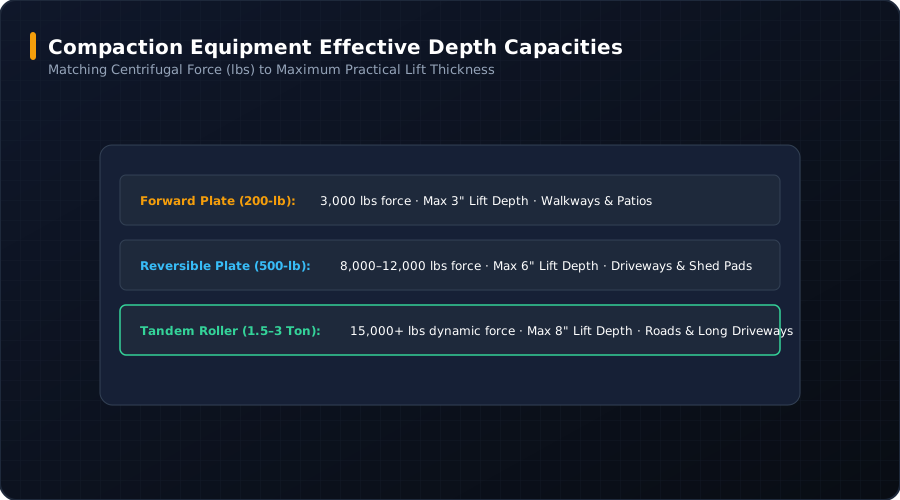
2. Equipment Comparison: Specifications & Depth Capacities
| Compaction Tool Class | Operating Weight | Centrifugal Force | Max Effective Lift Thickness | Daily Rental Cost | Best Suited Applications |
|---|---|---|---|---|---|
| Light Forward Plate (Single Direction) | 130 – 200 lbs | 2,500 – 3,500 lbf | 2 – 3 inches (50–75 mm) | $60 – $90 / day | Walkways, paver sand bedding, narrow trenches |
| Heavy Reversible Plate Compactor | 400 – 900 lbs | 8,000 – 16,000 lbf | 6 – 8 inches (150–200 mm) | $120 – $180 / day | Residential driveways, shed pads, garage slabs |
| Ride-On Smooth Tandem Drum Roller (1.5 – 3 Ton) | 3,000 – 6,500 lbs | 12,000 – 24,000 lbf | 6 – 10 inches (150–250 mm) | $220 – $350 / day | Long rural driveways, commercial parking lots |
| Single Drum Padfoot (Sheepsfoot) Roller | 6,000 – 15,000 lbs | High knead pressure | 8 – 12 inches (Cohesive soils) | $300 – $500 / day | Heavy cohesive clay subgrade embankment fills |
3. Forward Plate vs. Reversible Plate vs. Drum Roller
1. Forward-Only Plate Compactors (The “DIY Rental”)
- How they work: Single eccentric shaft pulls the machine forward at 50–70 ft/min while vibrating.
- Limitations: Cannot reverse; operator must manually muscle a 200-lb vibrating machine around tight corners. Because centrifugal force is limited to ~3,000 lbs, it can only compact 2 to 3 inches of aggregate per lift. If your driveway needs 6 inches, you must place and roll three separate shallow layers.
2. Reversible Vibratory Plate Compactors (The Professional’s Choice)
- How they work: Twin synchronized eccentric shafts allow instantaneous forward, neutral, and reverse travel via hydraulic control.
- Advantages: Generates up to 16,000 lbs of compaction force, compacting up to 6 to 8 inches in a single lift. Ideal for tight residential driveways, building perimeters, and hardscape bases where a ride-on roller cannot fit.
3. Ride-On Vibratory Tandem Drum Rollers
- How they work: Dual steel vibrating drums consolidate massive square footage rapidly with continuous forward and reverse hydro-static drive.
- Advantages: Incomparable speed for long driveways (100+ feet) and large parking lots. Creates a perfectly smooth, seamless surface profile.
4. The 50% Travel Overlap & Cross-Hatch Pass Pattern
Compacting in a random or circular pattern leaves uncompacted “wedges” of soft aggregate. Follow the systematic cross-hatch protocol:
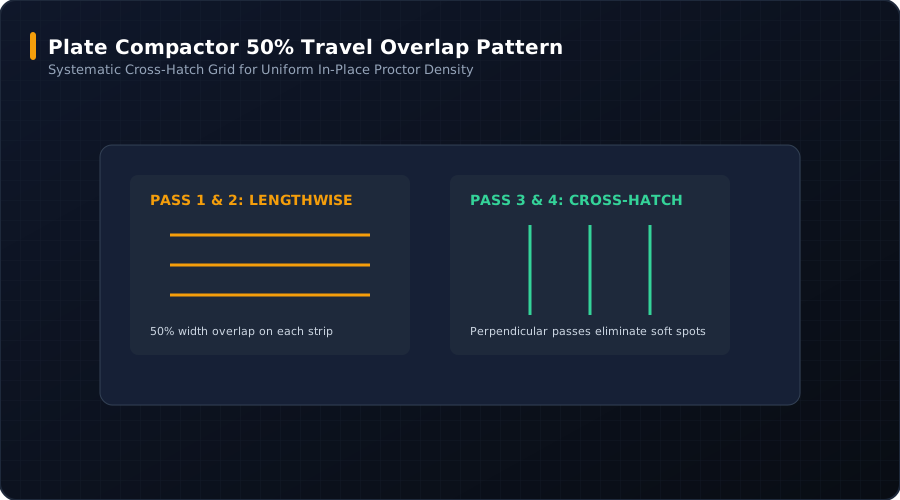
- Step 1: Outer Edge Containment: Make your first two passes along the outer boundaries (shoulders or timber edging) to lock the perimeter against lateral blowout.
- Step 2: Longitudinal Striping (50% Overlap): Run parallel strips lengthwise down the driveway, overlapping the previous pass by at least half the width of the plate or drum.
- Step 3: Transverse (Cross-Hatch) Finishing: Run perpendicular passes at 90 degrees to eliminate directional ripple marks and ensure consistent Proctor density across the entire footprint.
5. Economic Decision Matrix: Rental vs. Labor
- Driveways under 50 feet: Rent a heavy reversible plate compactor. It fits in standard pickup truck beds with ramps and delivers commercial-grade compaction without trailer transport costs.
- Driveways over 100 feet (or >50 tons of base): Rent a 1.5 to 3-ton ride-on tandem roller. The higher equipment rental fee is quickly offset by saving 6 to 10 hours of grueling walk-behind labor and achieving superior surface smoothness.
Calculate your project volume and aggregate needs with our Compaction Calculator and Driveway Base Calculator.
Civil Estimating & Geotechnical Engineering Review
Peer-VerifiedFormulas, density conversions, and lift recommendations are modeled after AASHTO M147 (Materials for Aggregate and Soil-Aggregate Subbase) and ASTM C33/D2922 standards. Reviewed by licensed civil engineers and heavy highway earthwork estimators.
Material & Application Specific Calculators
Access dedicated estimating pages tailored to specific quarry materials, regional state specifications, and project foundations.